yogabedarf The moves
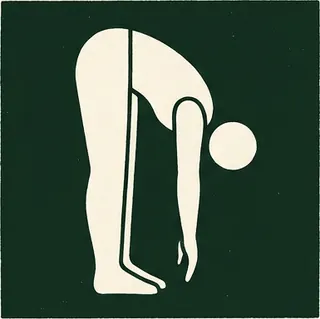
A person in a standing forward fold beside a huge meter dial whose needle points into the red zone, in sage, mustard and red on cream.

Bedarf-o-Meter

Bedarf is German for need. This meter guesses how much stretch you need right now.

8%

Low Bedarf

Freshly oiled hinge. Barely any Bedarf. Stretch anyway and show off a little.

Sitting today
Your neck
Back and shoulders

Your four moves are Neck turn, Chest opener, Wrist circles and Ankle stretch.

Stop if anything hurts. This is not medical advice. If you are not sure these moves suit you, check with a doctor or physio first.

The moves

16 gentle moves from the NHS and Mayo Clinic. The meter picks four, 15 seconds each, and different answers get different moves. Move slowly, never bounce, and only go as far as is comfortable. Mayo Clinic puts it simply. If you feel pain, you have stretched too far.

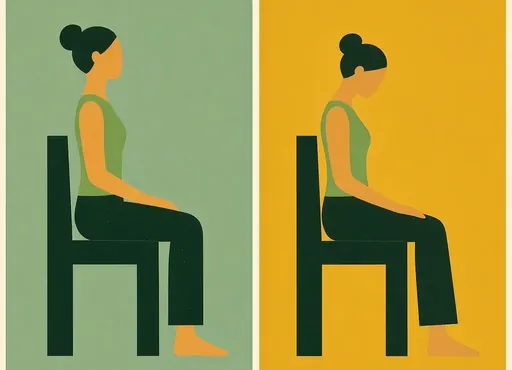
  1. A faceless figure sitting tall, then lowering the chin toward the chest.

    Chin to chest

    Sit tall with your shoulders level. Slowly lower your chin toward your chest until you feel a gentle stretch at the back of your neck. Hold a few slow breaths, then lift your head slowly.

    Mayo Clinic suggests it for a neck stiff from desk work. Mayo Clinic, Neck stretches for the workplace

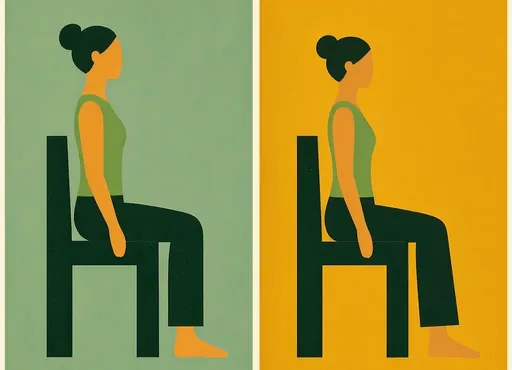
  2. Neck turn

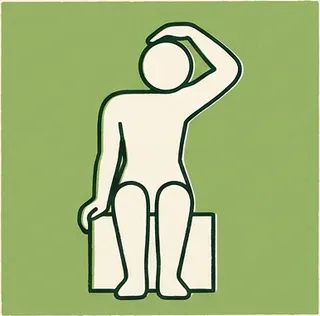
    Sit up, shoulders down, look ahead. Slowly turn your head toward your left shoulder, only as far as is comfortable. Hold 5 seconds, come back to the middle, then turn right.

    The NHS says this is good for neck mobility. NHS, Flexibility exercises

  3. Neck tilt

    Sit up and look ahead. Hold your left shoulder down with your right hand. Slowly tilt your head to the right. Hold 5 seconds, then swap sides.

    The NHS says this loosens tight neck muscles. NHS, Flexibility exercises

  4. A faceless figure sitting with arms hanging, then lifting the shoulders toward the ears.

    Shoulder rolls

    Let your arms hang loose by your sides. Slowly roll your shoulders forwards 5 times, then backwards 5 times.

    The NHS uses shoulder rolls in its basic warm-up. NHS, How to warm up before exercising

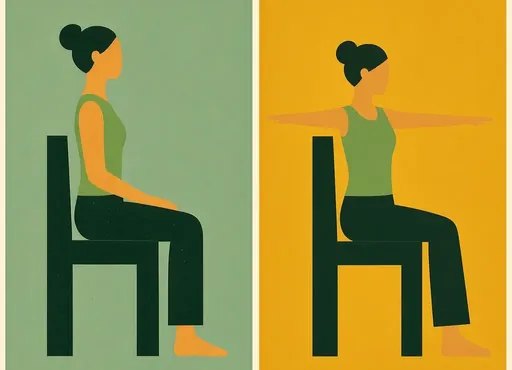
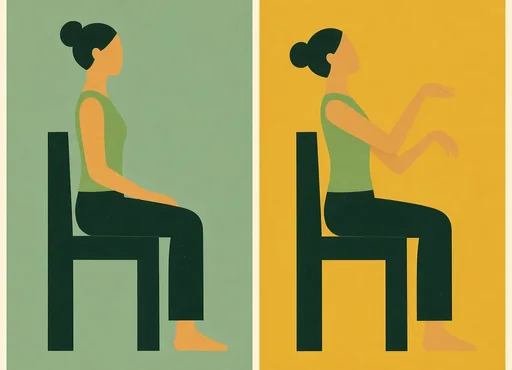
  5. A faceless figure sitting upright, then sitting away from the chair back with both arms out to the sides and the chest lifted.

    Chest opener

    Sit away from the chair back. Pull your shoulders back and down and put your arms out to the sides. Gently push your chest forward and up until you feel a stretch. Hold 5 seconds, relax, repeat.

    The NHS says this stretch is good for posture. NHS, Sitting exercises

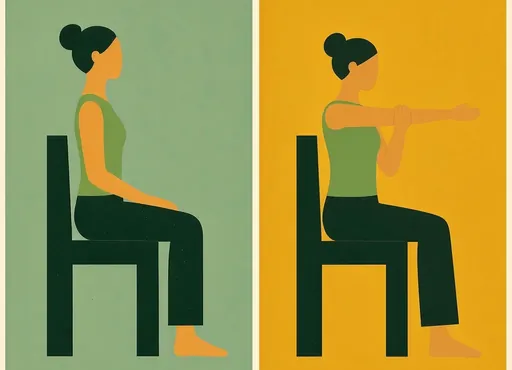
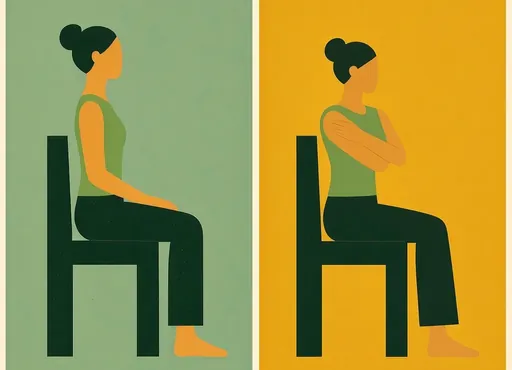
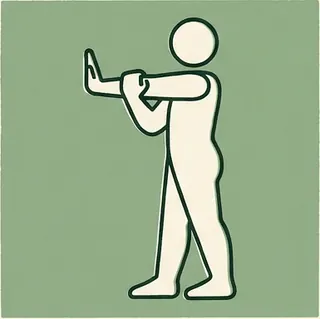
  6. A faceless figure sitting upright, then holding one arm across the body at the elbow.

    Arm across

    Bring your left arm across your body and hold it with your right arm, above or below the elbow. Hold a few slow breaths, then switch arms.

    Mayo Clinic uses this to keep shoulders flexible. Mayo Clinic, A guide to basic stretches

  7. A faceless figure sitting upright, then crossing the arms and turning the upper body.

    Seated twist

    Sit up with feet flat. Cross your arms and reach for your shoulders. Keep your hips still and turn your upper body left, as far as is comfortable. Hold 5 seconds, then turn right.

    The NHS says this keeps the upper back flexible. NHS, Sitting exercises

  8. A faceless figure sitting upright, then holding one arm out and pulling the hand downward.

    Wrist stretch

    Hold one arm out in front of you, palm down. Bend the hand down and gently pull it toward you with your other hand. Hold a few slow breaths, then swap hands.

    Mayo Clinic says this helps forearms that ache from typing. Mayo Clinic, Wrist and forearm stretches for the workplace

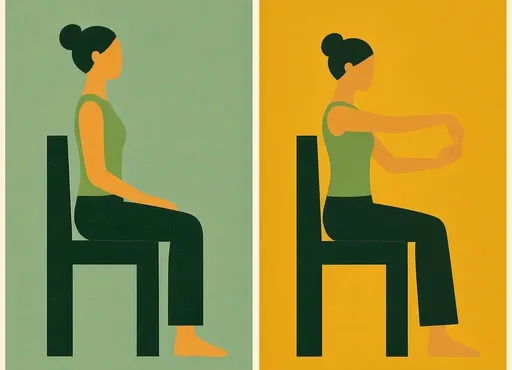
  9. Seated figure in profile, then the same figure with both forearms held out in front and the wrists loose.

    Wrist circles

    Hold both arms out in front of you with loose fists. Slowly circle your wrists outward a few times, then inward.

    Mayo Clinic says this can help blood flow to your hands. Mayo Clinic, Wrist and forearm stretches for the workplace

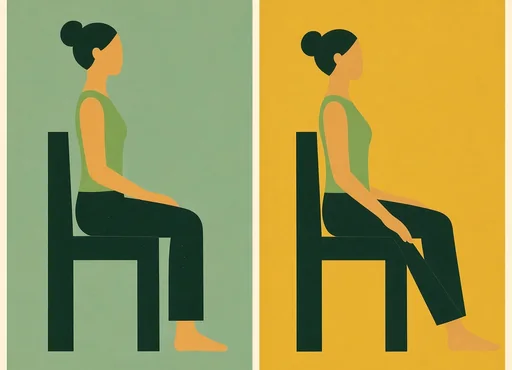
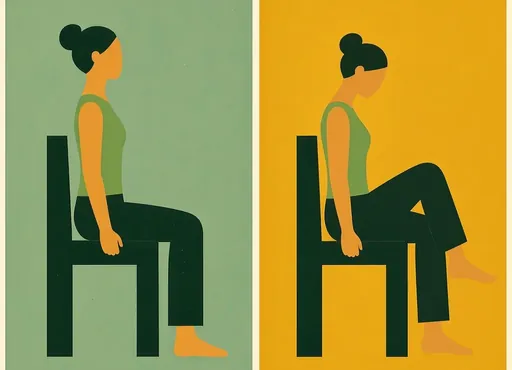
  10. Seated figure in profile, then the same figure with one leg straightened out in front.

    Ankle stretch

    Sit up and hold the side of the chair. Straighten one leg with the foot off the floor. Point your toes away, then gently back toward you. Swap legs.

    The NHS says this helps ankle flexibility and lowers the risk of a blood clot. NHS, Sitting exercises

  11. A faceless figure sitting upright, then lifting one knee as in a seated march.

    Seated march

    Sit up without leaning back and hold the sides of the chair. Lift your left knee as far as is comfortable, then put the foot down with control. Swap legs and keep going.

    The NHS says this works the hips and thighs. NHS, Sitting exercises

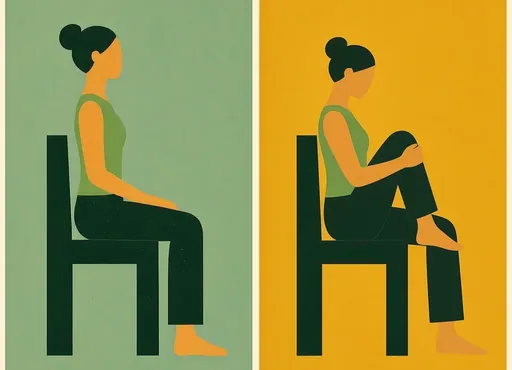
  12. A faceless figure sitting tall, then hugging one knee toward the chest.

    Knee to chest

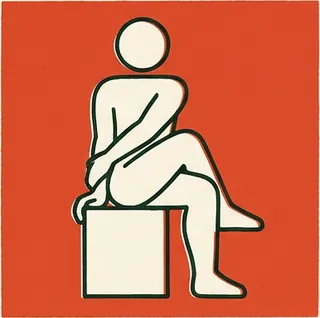
    Sit tall. Bring one knee toward your chest, hold the back of your thigh and gently pull it in. Keep your back straight. Hold a few slow breaths, then swap legs.

    Mayo Clinic says you feel this in the lower back and the top of the buttock. Mayo Clinic, Seated stretches for the workplace

  13. Seated hamstring stretch

    Sit on the front edge of a chair without wheels. Straighten one leg with the heel on the floor. Keep your back straight and gently lean forward from the hips. Swap legs.

    Mayo Clinic uses this for the back of the thigh after long sitting. Mayo Clinic, Seated stretches for the workplace

  14. Side bend, standing

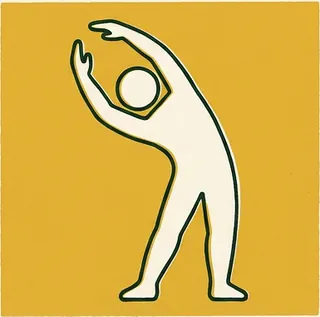
    Stand up, feet hip-width apart, arms by your sides. Slide your left hand down your side as far as is comfortable. Hold 2 seconds, come up, then the right side.

    The NHS says this helps lower back flexibility. NHS, Flexibility exercises

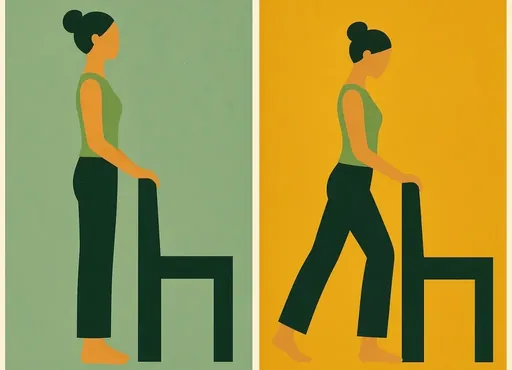
  15. A faceless figure standing with hands on a chair, then stepping one straight leg back, heel down.

    Calf stretch

    Stand and put your hands on a wall or desk. Step one leg back and keep it straight with the heel down. Gently bend the front knee. Swap legs.

    The NHS says this loosens tight calf muscles. NHS, Flexibility exercises

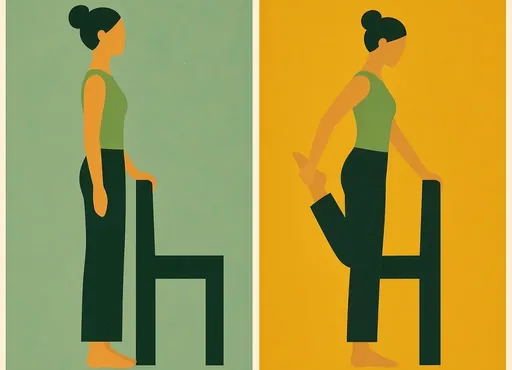
  16. A faceless figure standing and holding a chair, then drawing one ankle up toward the body.

    Standing thigh stretch

    Stand and hold a desk or chair. Gently bring one ankle up toward your bottom, knees side by side, back straight. Hold your trouser leg if the ankle is hard to reach. Swap legs.

    Mayo Clinic uses this to ease the front of the thigh. Mayo Clinic, Standing stretches for the workplace

About the meter

The Bedarf score is a playful guess from your three taps, not a health measurement. More hours sitting and a stiffer neck or back push it up. A stiffer neck brings more neck moves, a tighter back more upper-body moves, and longer sitting bigger leg moves, some of them standing. All 36 answer sets get a different set of four.

Nothing you tap leaves your browser. There is no camera, no microphone, no account, no cookies and no trackers. The link you can copy holds only your three answers and whether you finished.

Sources, all checked on 25 November 2026, are NHS, Sitting exercises, NHS, Flexibility exercises, Mayo Clinic, A guide to basic stretches, NHS, How to warm up before exercising, Mayo Clinic, Neck stretches for the workplace, Mayo Clinic, Wrist and forearm stretches for the workplace, Mayo Clinic, Seated stretches for the workplace, Mayo Clinic, Standing stretches for the workplace.